
28 April 2026 · 7 min read
Why replacing matters
When a tooth is lost, the opposing tooth over-erupts and the neighbours drift into the gap. The bite changes, cleaning becomes harder, and the jawbone in that area gradually resorbs.
Dental implant
The closest thing to a natural tooth. It preserves bone, leaves the neighbouring teeth untouched and lasts decades. It requires surgery, adequate bone and three to six months of healing, and it is the highest initial investment.
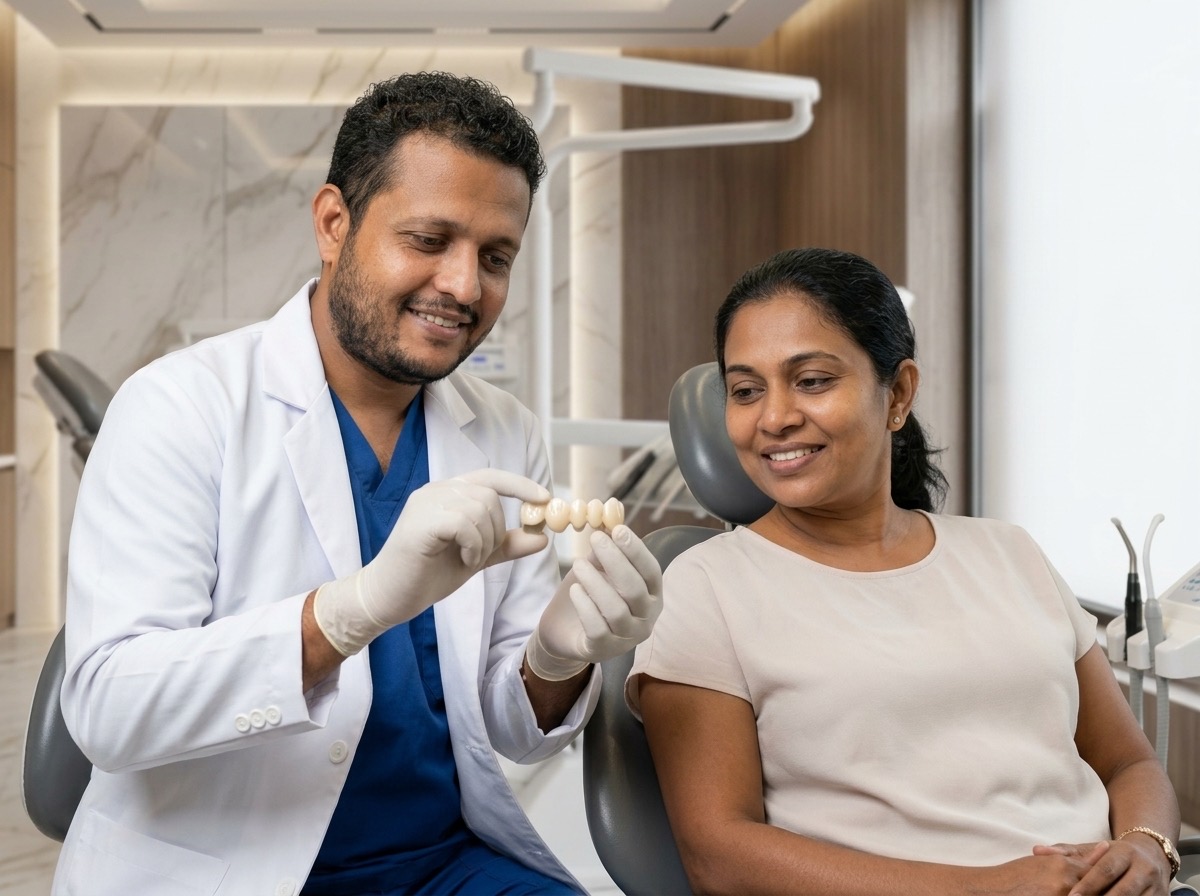
Bridge
Fixed and completed within a few weeks. The drawback is that healthy neighbouring teeth must be prepared to carry it, and cleaning beneath the bridge requires a threader every day.
Denture
The most affordable option and suitable when several teeth are missing. It is removable, takes some weeks to adapt to, and does not prevent bone resorption — though implants can be added later to stabilise it.
How we advise
We assess bone, bite, the health of neighbouring teeth, your medical history and your budget, then set out the realistic options in writing. There is no single right answer for every patient.