
Restorative
Root Canal Treatment
Pain-free endodontic therapy that saves an infected tooth instead of extracting it.
Overview
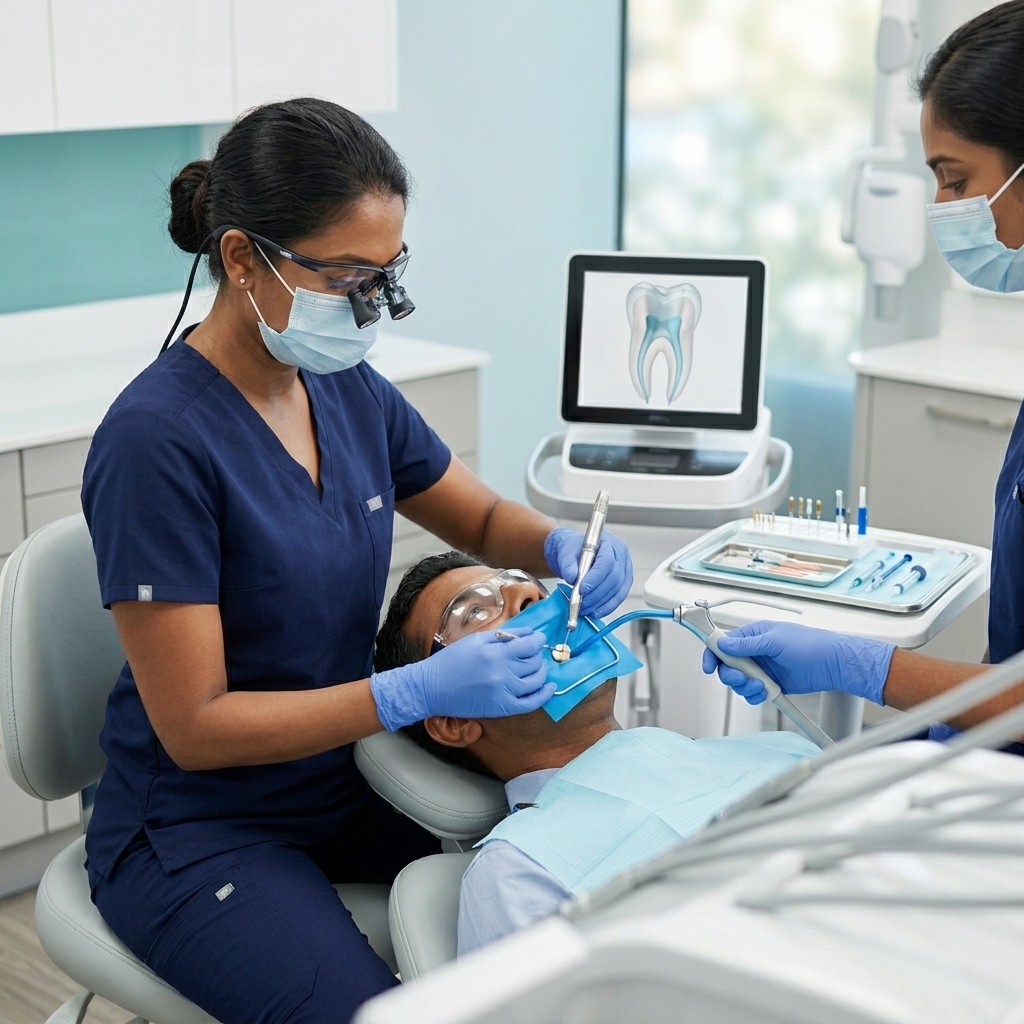
When decay or trauma reaches the nerve inside a tooth, the pulp becomes inflamed or infected and causes severe pain or swelling. Root canal treatment removes the infected pulp, disinfects and shapes the canals, and seals them so the natural tooth can be kept. Modern rotary instrumentation and effective anaesthesia mean the procedure feels much like having a large filling placed.
Benefits
- Saves your natural tooth instead of extracting it
- Relieves severe toothache and infection
- Preserves natural chewing function and appearance
- Prevents neighbouring teeth from drifting
Who needs this treatment?
- Severe, spontaneous or throbbing toothache
- Pain that lingers after hot or cold drinks
- A darkened tooth or a gum boil / abscess
- Deep decay or fracture reaching the nerve
How the procedure works
- 1DiagnosisVitality testing and periapical radiographs confirm the affected tooth.
- 2Access & cleaningUnder rubber dam isolation, the canals are cleaned with rotary files and irrigants.
- 3ObturationThe disinfected canals are sealed three-dimensionally with gutta-percha.
- 4Final restorationThe tooth is restored, usually with a crown, to protect it against fracture.
Recovery & aftercare
Mild tenderness on biting for two to four days, managed with simple painkillers.
Frequently asked questions
Is root canal treatment painful?+
The treatment relieves pain rather than causing it. With modern anaesthesia the procedure itself is comfortable for the great majority of patients.
Do I need a crown afterwards?+
Back teeth almost always need a crown, because a root-treated tooth becomes brittle and can split under chewing forces.
Related treatments
Tooth Fillings
Tooth-coloured composite restorations bonded to seal decay and rebuild natural shape.
Explore Tooth FillingsDental Crowns
Full-coverage zirconia and porcelain crowns that restore strength and natural translucency.
Explore Dental CrownsDental Bridges
Fixed replacement of missing teeth, anchored securely to the neighbouring teeth.
Explore Dental BridgesConsidering root canal treatment?
Book online in under a minute through SmileBook, or ask our AI Dentist a question first — day or night.